Neo-Japanese Tattoo Montreal
Irezumi-inspired custom tattoos
Yōkai, Japanese folklore and large-scale compositions with modern depth
Neo-Japanese Tattoo Montreal: Yōkai, Folklore and Body Flow
Neo-Japanese tattooing brings contemporary technique to the visual language of Japanese tattooing. Where traditional Irezumi follows established compositional conventions, neo-Japanese can use dimensional shading, broader color choices and freer narrative scenes while still respecting body flow and the relationship between subject and background.
At Nima Tattoo in Montreal, the neo-Japanese style is Nima Jolan's signature approach — a direct dialogue between centuries-old iconography and contemporary tattoo art. If you are searching for an Irezumi tattoo in Montreal, a Japanese tattoo near Laval, or a custom Japanese sleeve, this page explains the style and booking process. Every piece is designed from scratch, tailored to the specific placement, body, and story of the client.
This is the main English service page for neo-Japanese tattoo Montreal searches. If you are comparing artists, start with Nima's tattoo artist Montreal profile, then review this page for Japanese folklore and sleeve planning. For budget context before the consultation, see tattoo prices Montreal.
How the Consultation Shapes the Composition
The service starts with references, placement and scale rather than a fixed motif list. During the consultation, Nima maps the main subject, background movement, palette and session sequence to the client's body so the finished piece reads as one composition. For the historical and visual differences between Irezumi and contemporary work, read the educational guide What is Neo-Japanese Tattooing?
Yōkai and the Night Parade of One Hundred Demons
Koi, dragons, tigers and Hannya masks remain valid references, but they are only the familiar edge of a much larger visual culture. For Nima, yōkai folklore is the more interesting territory: named beings with strange rules, local histories, humor, danger and contradiction. It gives a tattoo a story and a scene instead of reducing Japanese imagery to a generic checklist.
The Hyakki Yagyō, or Night Parade of One Hundred Demons, gathers yōkai, oni, ghosts, animated objects and other supernatural beings into a single nighttime procession. That crowded, unruly world is strong material for sleeves and backpieces because characters, movement and background can be composed as one continuous narrative.
Folklore reference: Yokai.com, Matthew Meyer's illustrated database of Japanese ghosts and monsters.
The educational guide What is Neo-Japanese Tattooing? contains a broader starting index of individual yōkai. This service page stays focused on turning a chosen story into a tattoo plan.
Current Neo-Japanese Tattoo Work
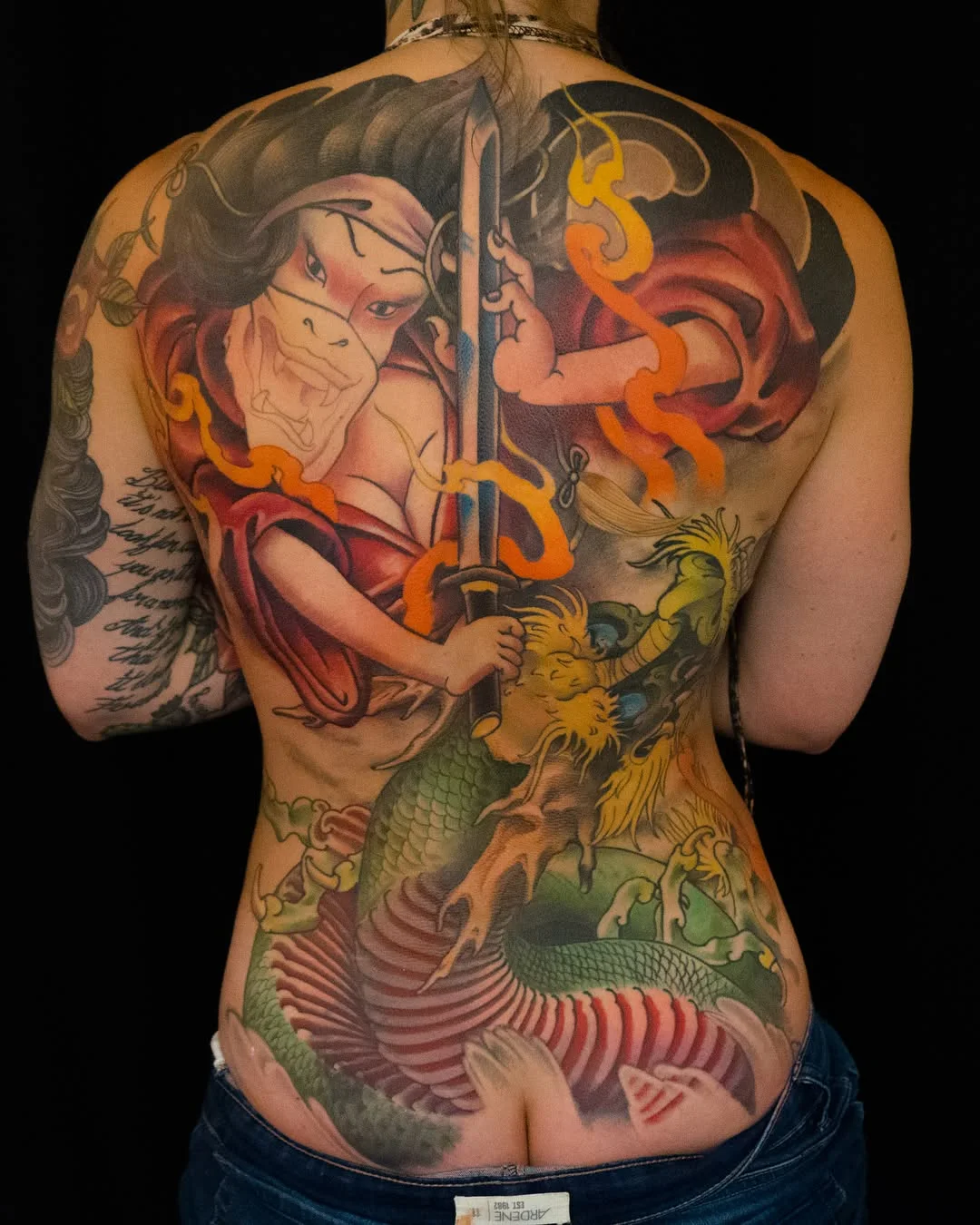
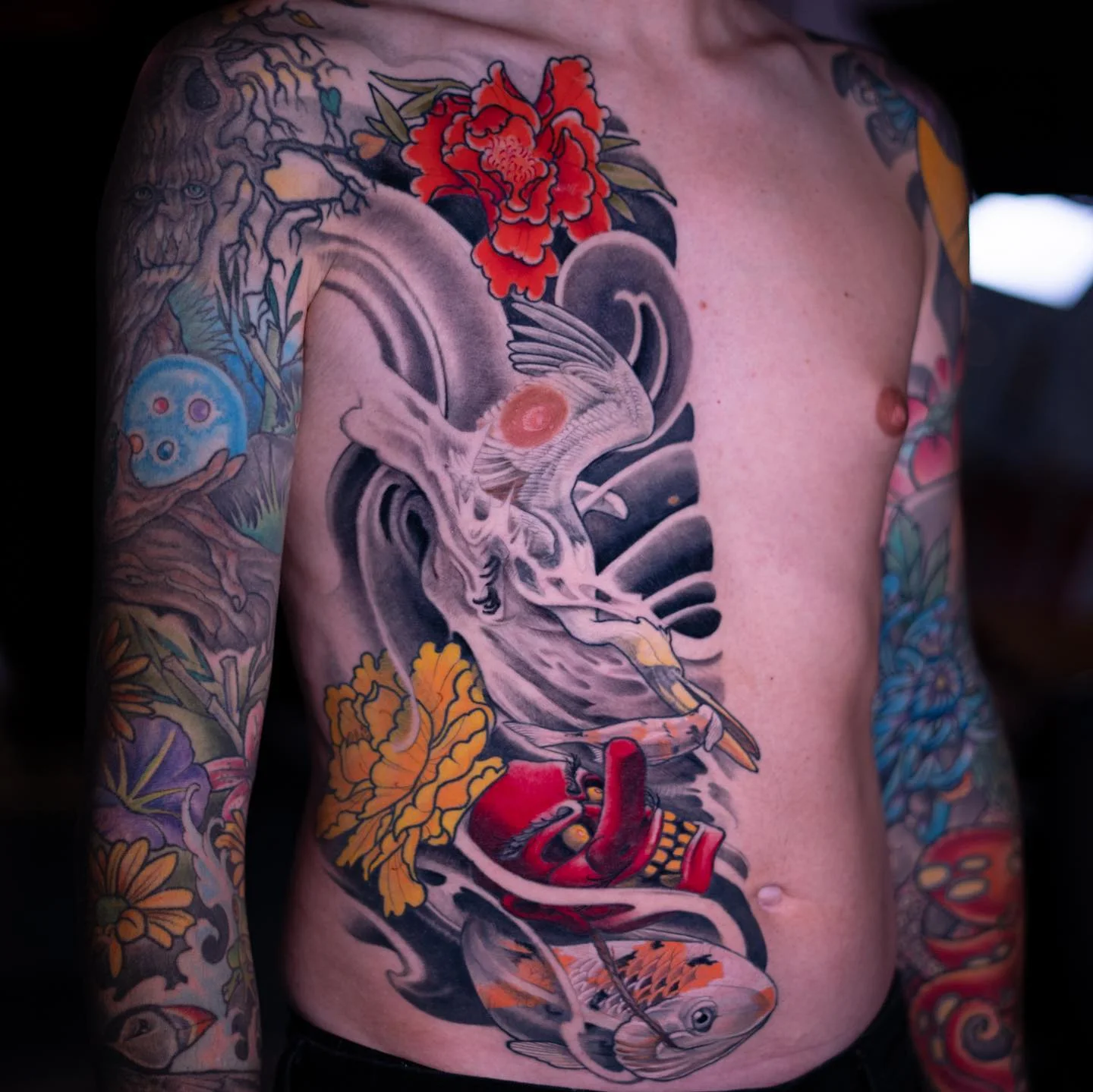
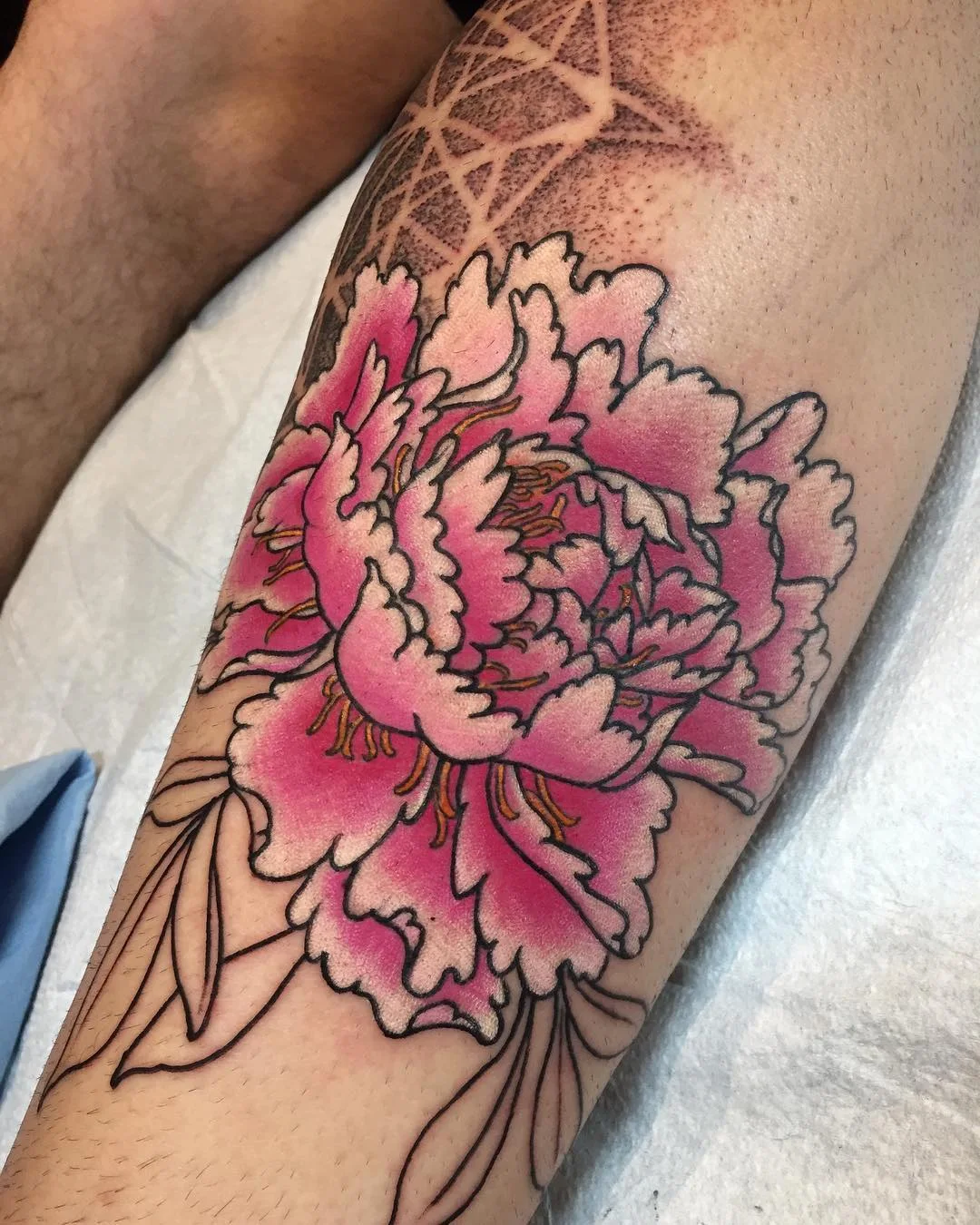
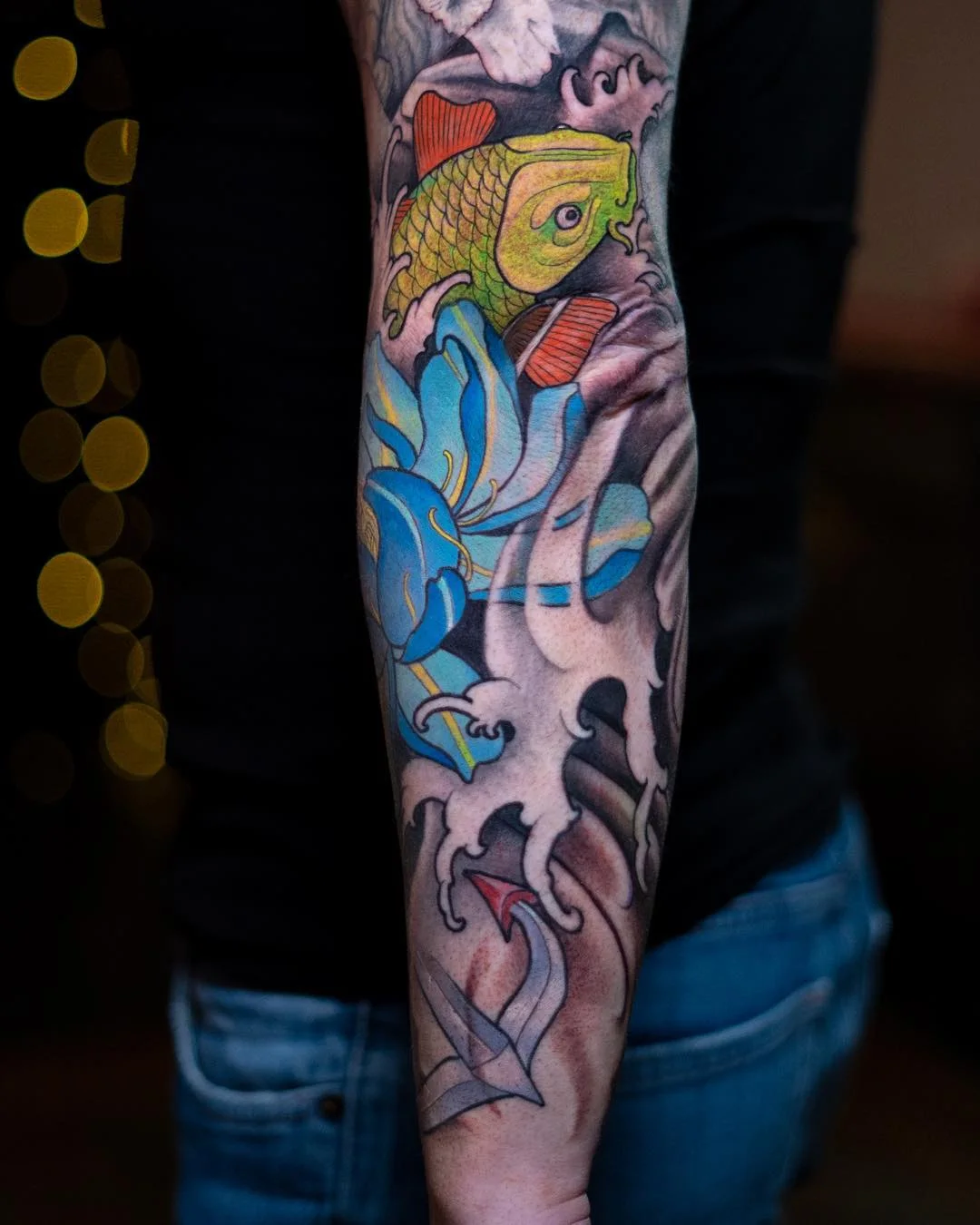
These photographs show Nima's current compositional language. Their captions describe the tattoos accurately; they are not relabelled as yōkai pieces when the subject is something else.
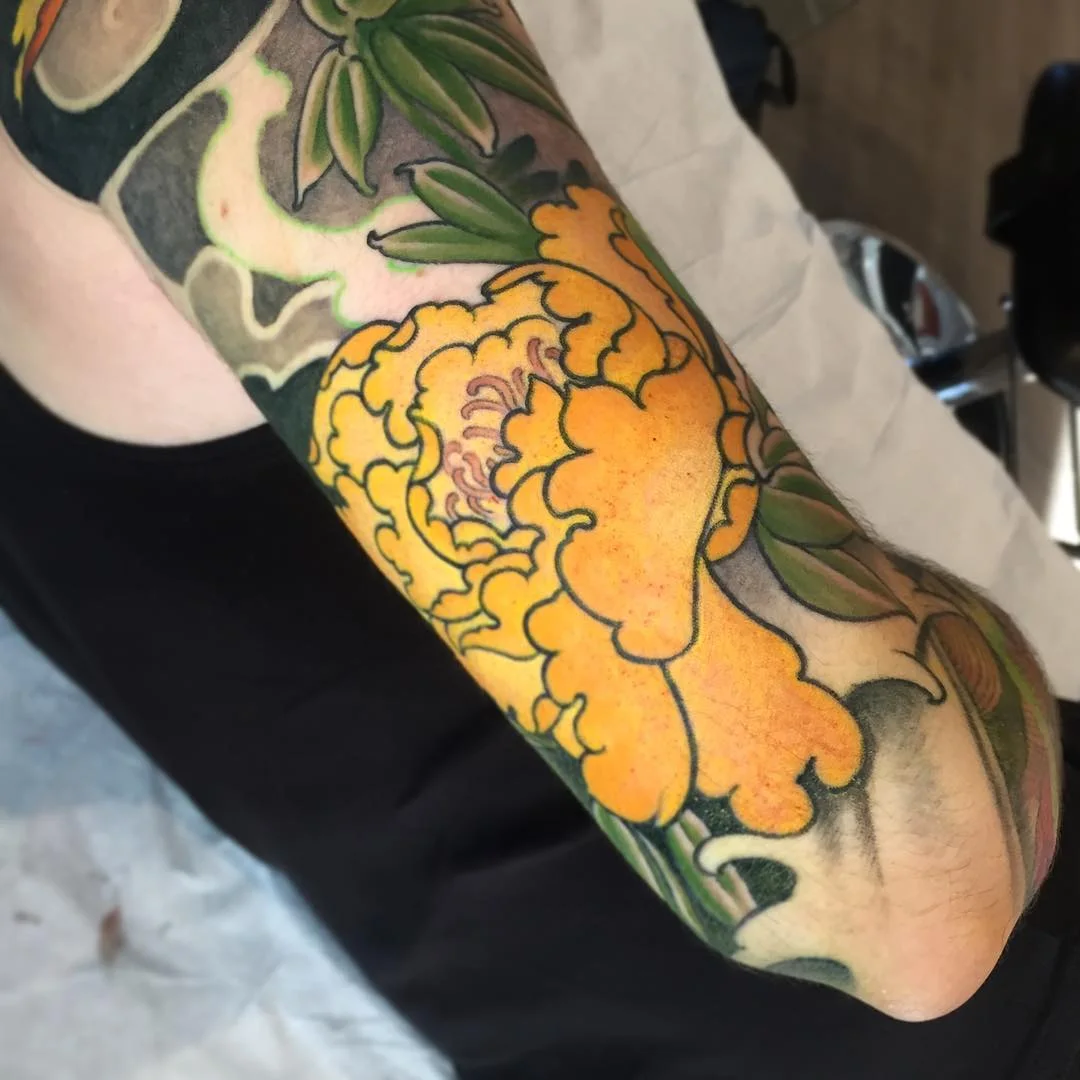
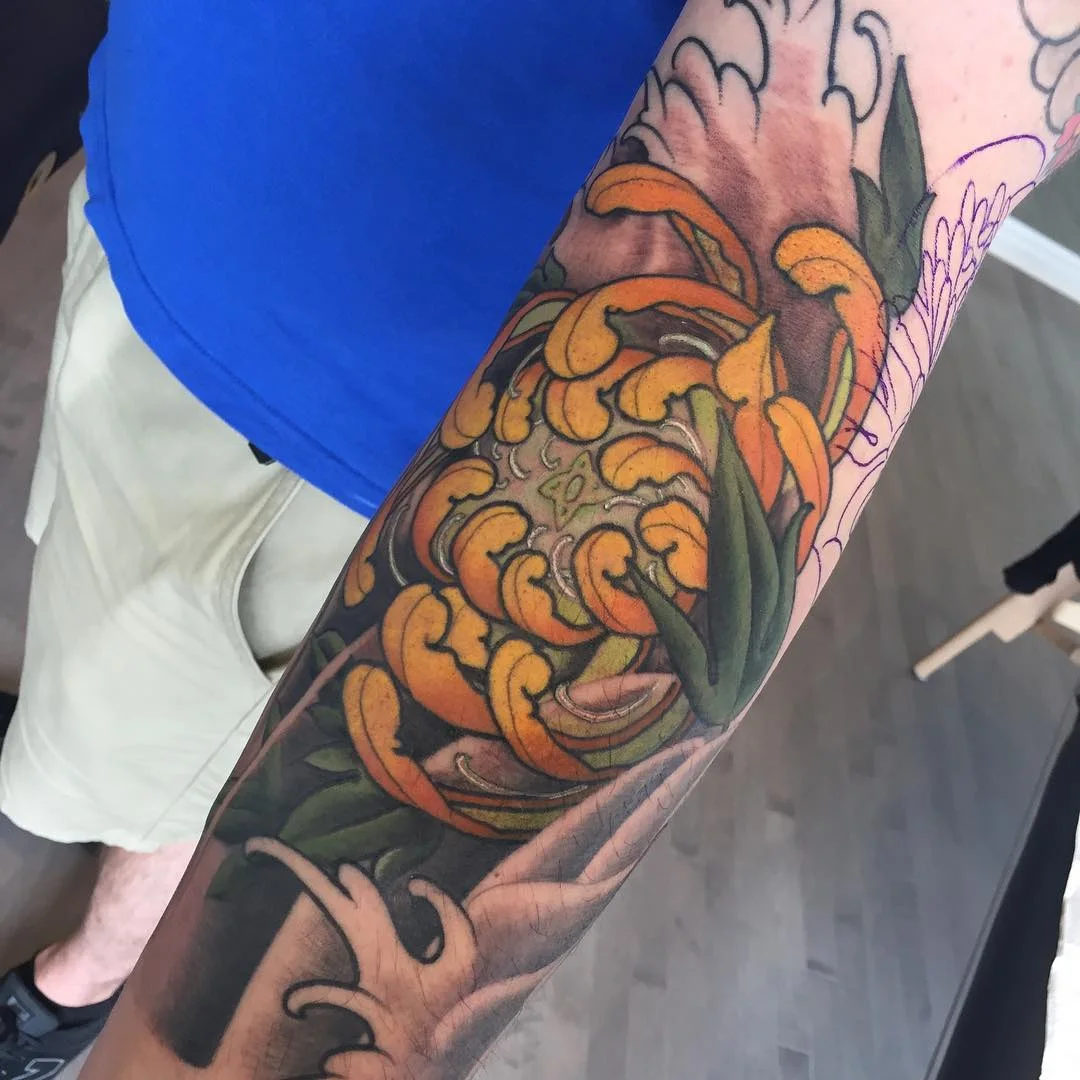
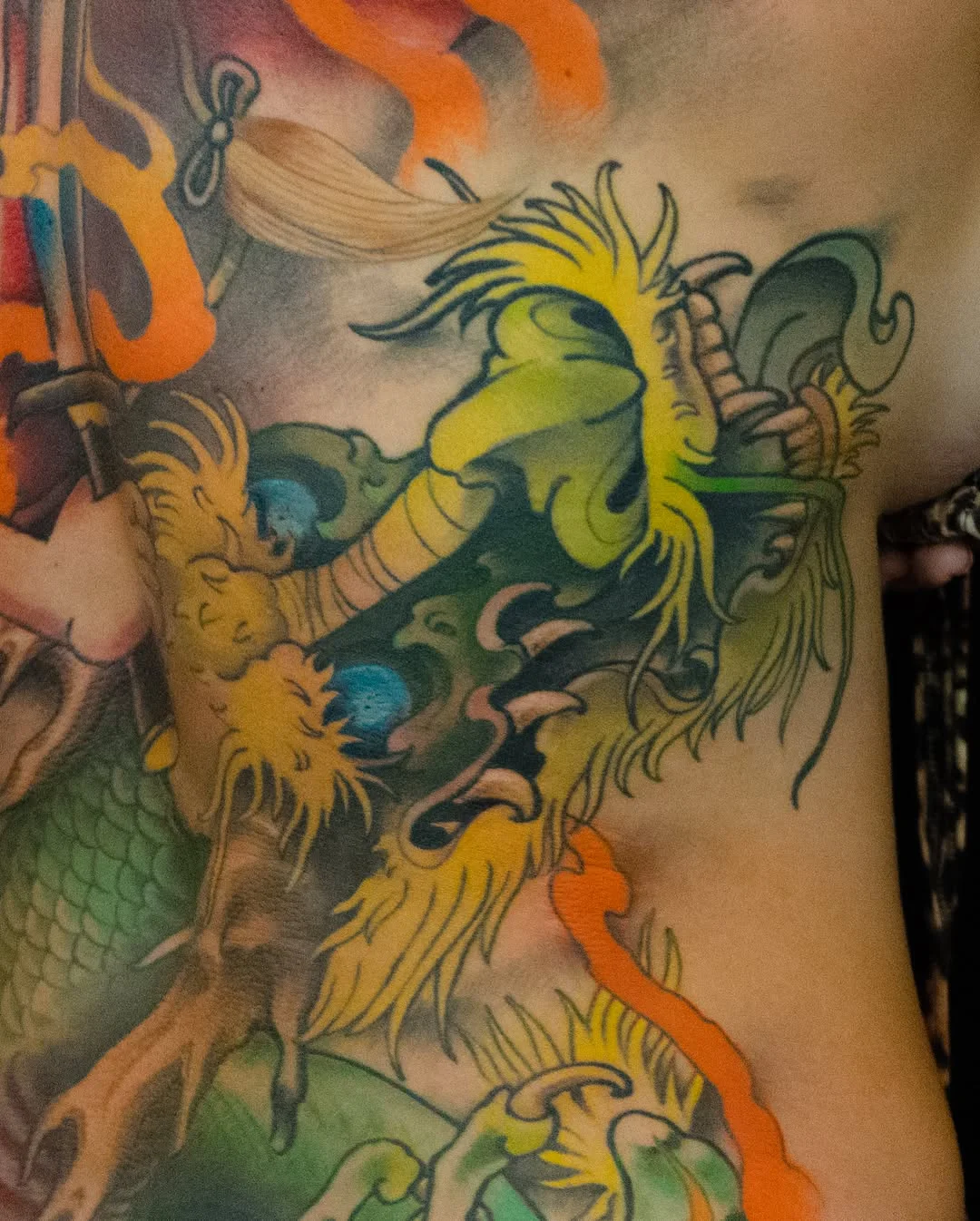
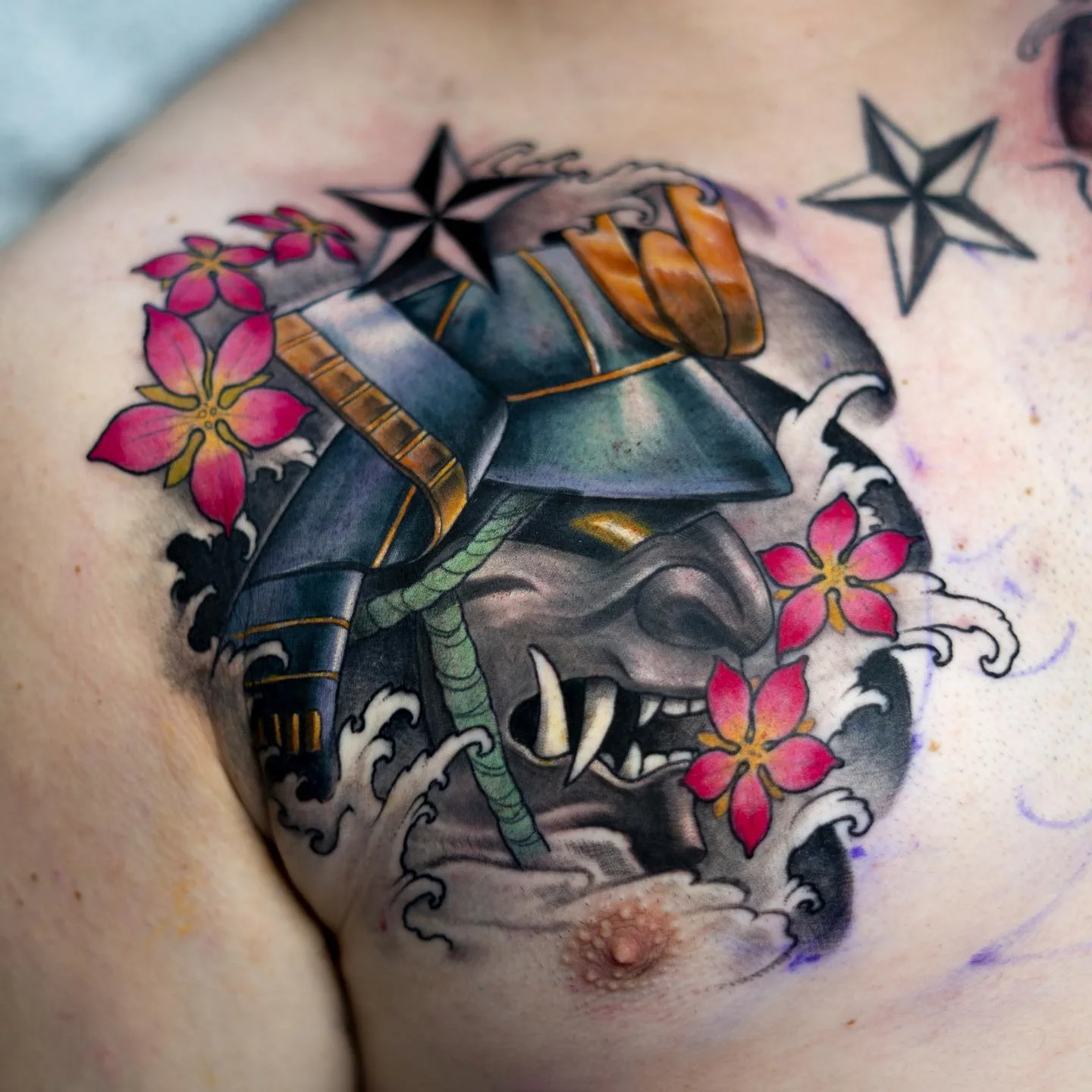
Narrative Japanese Tattoo Projects in Montreal
Nima works with Japanese tattoo references without copying flash or repeating designs. A sleeve, backpiece or thigh panel can start with one yōkai, an encounter between several beings, or the chaos of the Hyakki Yagyō, then be rebuilt around the client's placement and movement.
This approach is strongest for Japanese sleeve tattoos in Montreal, connected torso panels, full backpieces and other large projects where a complete folklore scene can unfold across the body. The consultation is free and is used to confirm scale, placement, references, number of sessions and whether the project should be built in color, black and grey, or a hybrid direction.
The French version of this service is tatouage néo-japonais à Montréal. If you are comparing artists before booking, read how to choose a tattoo artist in Montreal. Before a long appointment, use the full-day tattoo session preparation guide. For a darker approach, compare with black and grey realism tattoo Montreal.
About the Artist
Nima Jolan is a Montreal-based tattoo artist with over 20 years of experience. His neo-Japanese work is characterized by precise linework, deep tonal range, and compositions built specifically for the body placement. He has been operating his private studio in the Centre-Sud neighbourhood since 2017.
- 20+ years tattooing experience
- 5.0 rating on Google
- Private studio — one client per day, full-day sessions
- Free consultation, free touch-ups within 1–2 years
- Bilingual service: French and English
FAQ — Neo-Japanese Tattoo Montreal
What happens during a neo-Japanese tattoo consultation?
The free consultation reviews the story, references, placement and scale of the project. Nima then plans the main subject, background flow, palette and likely session sequence around the client's body.
Can I bring yōkai or Japanese folklore references?
Yes. Bring characters, stories or visual references that interest you. Yokai.com is a useful research source, and the Hyakki Yagyō can provide a framework for connecting several beings in one scene.
Can a neo-Japanese tattoo be black and grey?
Yes. A project can be built in color, black and grey or a controlled hybrid. The choice depends on the subject, placement, contrast and the client's existing tattoos.
Which placements work best for narrative Japanese tattoos?
Sleeves, backpieces, chest panels and thighs provide enough room for a main subject, supporting figures and background movement. Smaller placements are possible when the scene is simplified for long-term readability.
How is the session count estimated?
Scale, coverage, detail, color and skin response determine the schedule. A full sleeve often takes 4 to 8 full-day sessions, while a half-sleeve can often take 2 to 4. The estimate is confirmed during consultation.
How do I book a custom neo-Japanese tattoo in Montreal?
Submit the booking form with the subject, placement, approximate size and reference images. The consultation is free, and every design is custom rather than repeated flash.
Start Your Neo-Japanese Piece
Free consultation · Private studio · 100% custom · Montreal
Book a Free Consultation